The very name, Ecuador, tells the story of the close bond of this small South American country with the Equator, the latitude shared by all coffee-producing nations. Yet, despite coffee having been grown here for a long time and the country’s geography being extraordinary, Ecuador is known for its instant coffee—certainly not for the quality of its beans in the way Brazil and Colombia are.
There are a few reasons, as we’ll see, but the important point is that in recent years things have been changing quickly thanks to renewed momentum in the sector and the emergence of what can be described as a new generation of growers: market-aware and determined to bet everything on quality.
Ecuador’s specialty coffee revolution
This new generation includes Pablo Andres Eguiguren Calisto, whom we interviewed for the “Meet the Farmer” series.
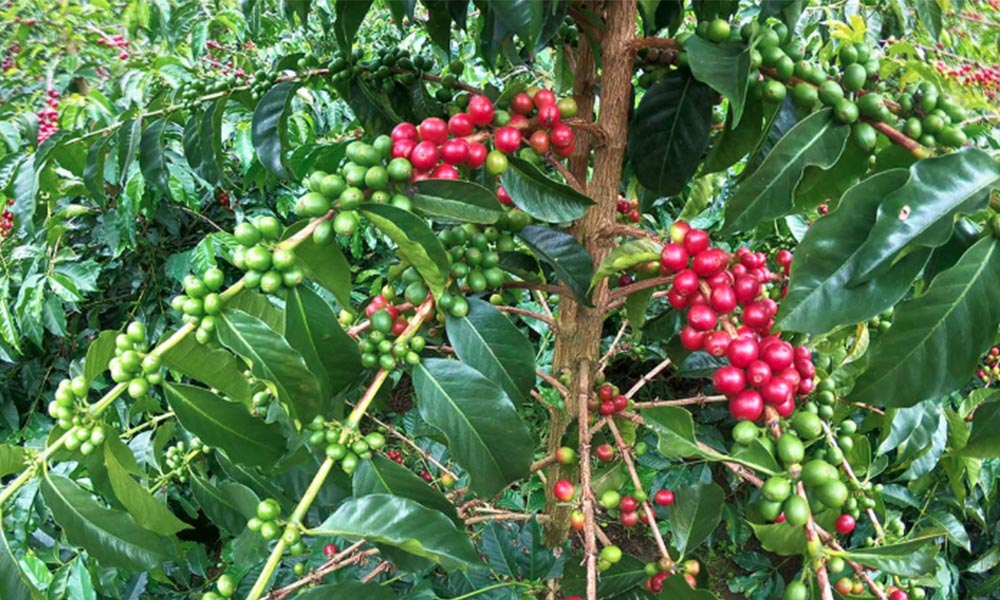
In 2019, Pablo took over the management of the family plantation “El Ahuacate”, in the province of Loja. He transformed it entirely by introducing specialty coffee varieties such as Geisha, Sidra, Catuai, Typica and Colombia Seats, and he told us with conviction: “In the coming years, people all over the world will be drinking Ecuadorian coffee.” As you will be able to hear in his own voice, the conditions for high-quality coffee are all there: investments in processing systems, collaborations with universities, and experimentation—combined with the plantation’s nearly two thousand meters of altitude—have delivered excellent results after just one year.
After the ups and downs of the last century, for this small country wedged between Peru and Colombia it represents a real paradigm shift. Arabica first arrived in the coastal region of Manabí around the mid-1800s, but it began to be exported only around 1930, after the cocoa crisis pushed many growers to focus on coffee instead. From that moment on—also thanks to the arrival of Robusta in 1951—cultivation grew to the point of involving more than a hundred thousand families, and exports increased until Ecuador became the world’s tenth-largest coffee exporter.
The situation changed drastically in the mid-1990s. Under an international regime of zero-tariff imports, the largest Ecuadorian company in the coffee chain chose to import coffee from Vietnam to turn it into instant coffee instead of sourcing from the domestic market. In one stroke, internal production began to collapse and instant coffee spread throughout the country. Also battered by natural disasters (El Niño, 1997–1998), internal economic crises (2000–2006), and the subsequent collapse in coffee prices, Ecuador’s domestic production shrank dramatically up to 2016. But, as noted, in recent years a new government push—the Ecuadorian coffee reactivation program—and a new class of growers have been putting Ecuadorian coffee blends on the path toward international recognition for quality, while also encouraging a renewed local appreciation.
The regions of Ecuadorian coffee
Ecuador is one of the few countries in the world where both Arabica (60%) and Robusta (40%) are successfully grown, and above all it has such a varied ecosystem that coffee is cultivated in twenty-three out of twenty-four provinces.
In short, coffee is everywhere—and precisely because of this geographic diversity it offers a very wide range of flavors and aromas. Its key traits, however, are sweetness and delicacy, with notes reminiscent of flowers and chocolate—another central product in the country’s economy. Along the coast, in the provinces of Manabí, Guayas and El Oro, more than half of the country’s Arabica is produced. These areas, however, do not reach a thousand meters in altitude, so to find truly high-quality coffee you need to look elsewhere. The same is true for the Amazon region (the provinces of Napo and Orellana), where Robusta is produced and then used for instant coffee. The great Ecuadorian coffees are grown in the northern highlands and in the mountainous provinces of the south. In the north, the provinces of Pichincha, Carchi and Imbabura are known for a very balanced Arabica.
The provinces of Loja and Zamora Chinchipe, instead, are where cultivation of Ecuadorian specialty coffees is most concentrated. In particular, the province of Loja is famous for an Arabica with pronounced acidity, medium sweetness, and a delicate aroma. And then there are the Galapagos. The place where Darwin grasped the dynamics of evolution is so extraordinary in its biodiversity that it makes it possible to cultivate a small number of plants from which—thanks to the combination of the Humboldt Current’s influence and volcanic soils—a well-balanced, low-acidity coffee is produced, one that can command extremely high prices on the market.