Uncategorised
Expired coffee: how long it lasts and when it can still be drunk
Finding a pack of expired coffee in the pantry almost always raises the same question: can you still drink it, or is it better to throw it away? The answer requires an important distinction, because when it comes to coffee, the date printed on the package does not necessarily mean that the product becomes unusable the following day.
It is important to distinguish between food safety, storage and cup quality. Coffee may still be safe to use while having already lost much of the aroma that made it interesting. Understanding how long coffee lasts, how to store it and which signs to look out for can therefore help reduce waste without sacrificing quality. Discover CaffèLab’s quality coffee blends and enjoy the best aromas in your cup, just like at a coffee bar!
Coffee expiration: best-before date and use-by date
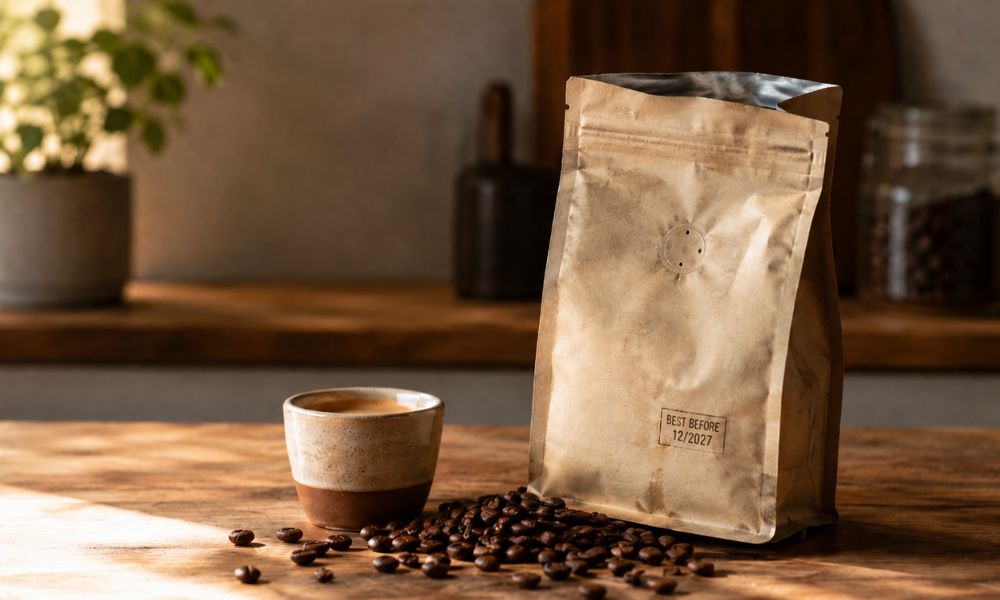
When talking about coffee expiration, the first point to clarify is the wording printed on the package. In most cases, coffee comes with a best-before date, usually indicated by wording such as “best before”.
This is not the same as a use-by date used for highly perishable foods. A best-before date indicates the period during which the product is expected to retain its intended characteristics, provided that it has been stored correctly.
Once that date has passed, coffee therefore does not automatically become unsafe, but it may begin to show a more noticeable decline in its aromatic and sensory qualities.
The situation changes if the package has been opened, damaged or stored in conditions involving moisture, excessive heat or contamination. In these cases, you should not consider only the date printed on the package, but also the actual condition of the product.
Can you drink expired coffee, or can it be harmful?
In many cases, coffee that has passed its best-before date may still be usable, especially if the package is intact and has been stored correctly. However, this does not mean that any expired coffee can be safely consumed without carrying out a few checks.
There is no fixed number of weeks or months that applies to every product. Several factors can make a difference, including:
- the type of packaging,
- the format,
- the roast,
- the amount of oxygen inside the package,
- the storage conditions after opening.
When asking “can expired coffee make you sick?”, it is therefore better to distinguish between simply exceeding the best-before date and actual spoilage. If the product shows mould, obvious moisture, contamination, unusual smells or severely damaged packaging, it is safer not to use it.
On the other hand, a simple loss of aromatic intensity does not necessarily mean that the product has deteriorated from a hygiene or food-safety perspective. It mainly means that the quality in the cup may now be very different from the original.
How to tell if coffee has gone bad
Before using a very old pack of coffee, it is worth carrying out a simple visual and sensory check. There are only a few things to look for:
- mould or obvious signs of moisture;
- unusual, rancid or foreign smells that differ from the normal aroma of coffee;
- clumps in ground coffee caused by moisture;
- contamination or insects;
- damaged or open packaging, or coffee stored in unsuitable conditions.
The fact that the aroma is less intense does not necessarily mean that the coffee should be thrown away. Aroma loss is a natural process linked to the ageing of the product and can begin well before the best-before date.
This is where it becomes useful to distinguish between expiration and freshness.
How long do coffee beans, ground coffee and capsules last?
Quality over time varies considerably depending on the format. Whole bean coffee tends to preserve its aromatic compounds better than ground coffee because a smaller surface area is exposed to oxygen.
Once coffee is ground, the surface area exposed to air increases enormously. Oxidation speeds up and volatile aromatic compounds begin to dissipate more quickly. For this reason, it is preferable to buy whole bean coffee and grind it shortly before brewing when aiming for the best possible quality.
You can learn more about this in our complete coffee grinding guide, where we explain how grind size and freshness affect the final result.
Capsules and coffee pods are also designed to protect coffee from the external environment. As long as the package remains perfectly intact, the product benefits from a stronger barrier against oxygen and moisture. Once the best-before date has passed, however, there is still no guarantee that aroma and intensity will remain unchanged.
A long commercial shelf life should therefore not be confused with the idea that coffee can maintain the same sensory profile indefinitely.
Coffee expiration and freshness are not the same thing
This is probably the most important point. Coffee can still be within its best-before date and already be lacking in freshness.
After roasting, several changes begin to take place. The beans release carbon dioxide and, over time, progressively come into contact with oxygen. The most volatile aromatic compounds diminish and the flavour profile in the cup may become less complex.
The roasting date therefore has a different meaning from the best-before date. The latter relates to the shelf life of the product, while the roasting date helps you understand where the coffee is in its aromatic development.
In CaffèLab’s guide to freshly roasted coffee, we explore in detail the relationship between roasting, degassing and extraction performance.
With very old coffee, you can expect a less aromatic cup, with lower flavour definition and a flatter sensory profile. With high-quality coffee, this difference can be particularly noticeable because the aromatic notes that distinguish origin, variety and processing method gradually fade away.
How to store coffee for longer
To keep coffee in good condition, it should above all be protected from air, light, heat and moisture.
After opening, it is best to reseal the package carefully. Thanks to the airtight closures on our packages, it is easier to preserve ground coffee for as long as necessary. Ideally, store it in a cool, dry place away from heat sources such as the oven, hob or direct sunlight.
The refrigerator is not automatically the best solution for normal everyday use. Temperature fluctuations and moisture can create unfavourable conditions, especially when the container is repeatedly opened and closed.
For those who want to preserve the product’s characteristics as effectively as possible, the simplest approach is to buy quantities that match your actual consumption and, whenever possible, choose freshly roasted single-origin coffee, avoiding leaving open packages unused for excessively long periods.
When coffee has passed the date shown on the package, it does not necessarily need to be considered unusable. Instead, you should check the integrity of the packaging, storage conditions and the actual condition of the product. At the same time, if your goal is to prepare a cup rich in aromas and nuances, freshness remains a much more important factor than the date printed on the label alone.
At CaffèLab, you can learn how every stage influences what ultimately ends up in your cup and choose from the best coffee blends from around the world!