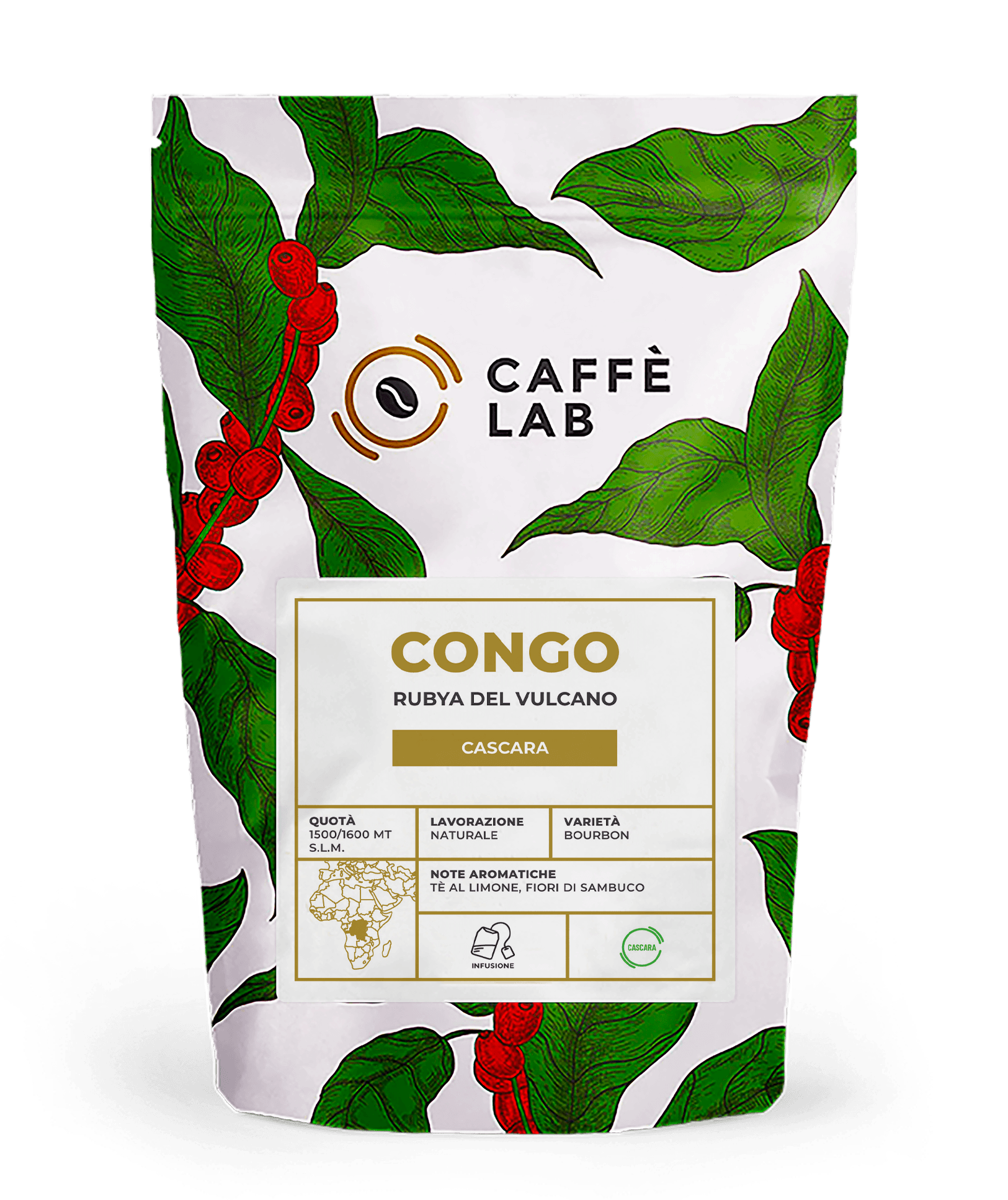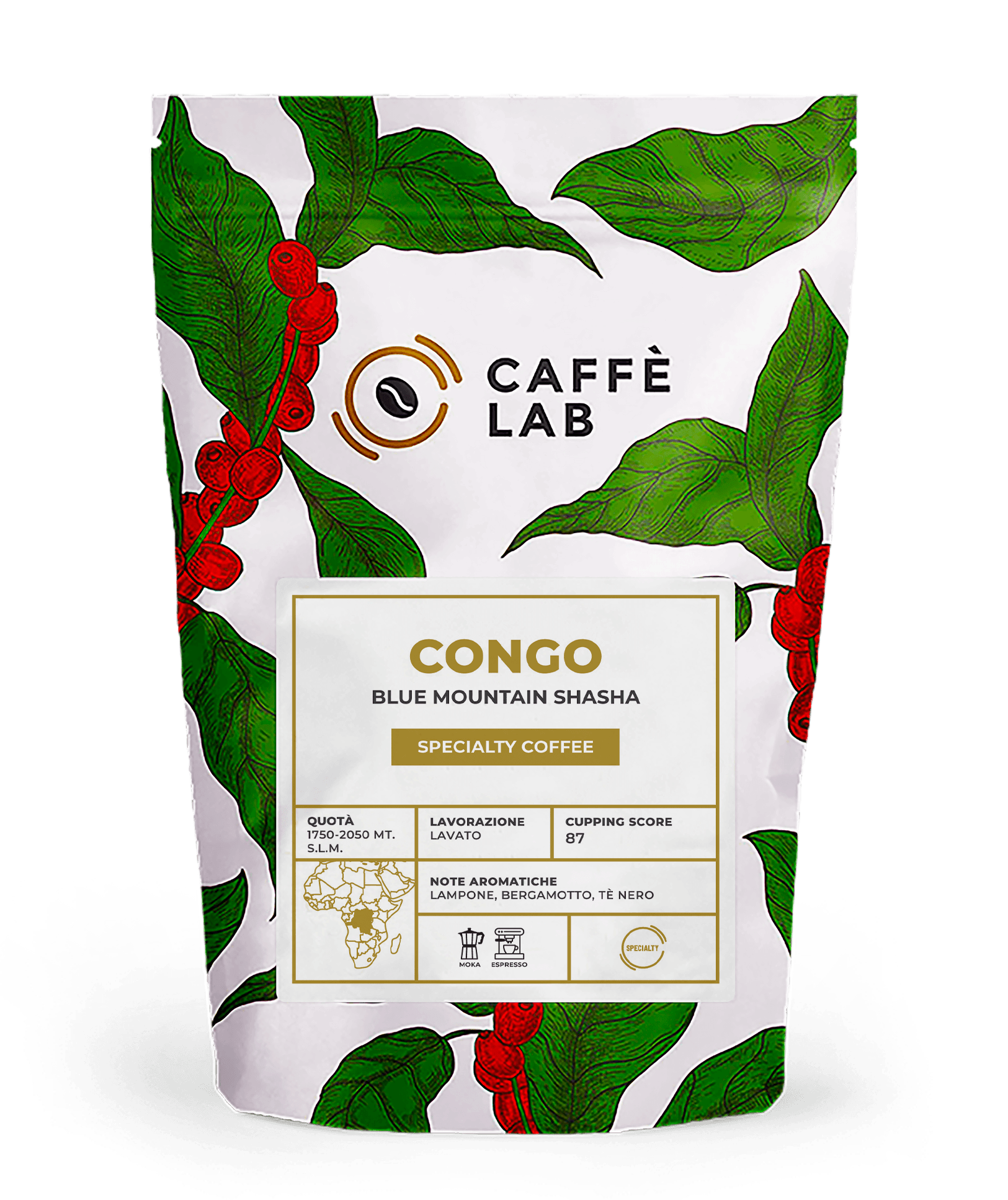


Congo
Blue Mountain Shasha
12.50 €
The history of African coffee—and coffee worldwide—has its roots in the tropical forests of East Africa, specifically in the historic region called Kaffa (today in Ethiopia), from which the Latin name of the genus derives: Coffea arabica. According to legend, it was a herdsman named Kaldi who, many centuries ago, noticed the energizing effect of the berries on a group of goats that had eaten the shrub’s fruits: those berries supposedly gave them an unexpected vitality, prompting Kaldi himself to try them.
From those wild forests, Coffea arabica began to be harvested—at first in its natural habitat, before the advent of structured cultivation. Over time, the seeds were transported to Yemen and to the rest of the Arabian Peninsula, from where they spread across the world. This journey turned a shrub native to Africa into a global commodity, loved in every corner of the globe. Every coffee blend from Africa tells a story steeped in origins and historical traditions. From African farms, in fact, come the finest specialty coffees available in the CaffèLAB shop.
The vast Coffea genus includes dozens of species of coffee plants, but the ones that hold international economic and commercial importance are mainly two: Coffea arabica and Coffea canephora, better known as Robusta.
There is also the Liberica species, produced in smaller quantities—about 2–3% of global production. It has a particularly fruity and intense taste with a bold aftertaste.
This botanical diversity allows Africa to offer a wide range of coffees: from top-quality arabica to robusta destined for blends and mass markets.
Among the African countries most famous for coffee production, Ethiopia undoubtedly stands out, considered the historical cradle of coffee. Today Ethiopia is the leading African producer: with about 496,200 tonnes produced in 2022, it represents a significant share of the global market. Millions of small farmers—often on small family plantations—devote their work to coffee, and much of the cultivation is still carried out by hand, following traditional methods. From these plantations also come the single-origin coffees of CaffeLAB, with unique characteristics and truly rare productions.
The cultivation areas in Ethiopia include southern and southwestern regions such as Sidamo (with the renowned sub-region Yirgacheffe), Harrar, Limu, Guji (Hambela), and the province of Kaffa: high altitudes, fertile soils, and an ideal climate for quality arabica. It is not uncommon to still find wild trees that bear witness to the original biodiversity of Coffea arabica.
Another major country is Kenya, whose plantations are located in highlands around Mount Kenya and in mountainous areas such as the Aberdare Range, Kisii, Nandi, Kericho, and other districts. Here, the high altitude, terroir, and a careful processing system enable the production of arabica with an intense aroma, full body, and a piercing acidity.
Other countries, such as Uganda or the Democratic Republic of the Congo, cultivate both Robusta and Arabica, often in small farms or farming communities, contributing to the variety of Africa’s coffee heritage.
African plantations are often made up of small farms, run by families or cooperatives, where harvesting and processing are done manually. In many cases, sowing and plant care respect environmental conditions, such as natural shade and interaction with local ecosystems, contributing to sustainable production.
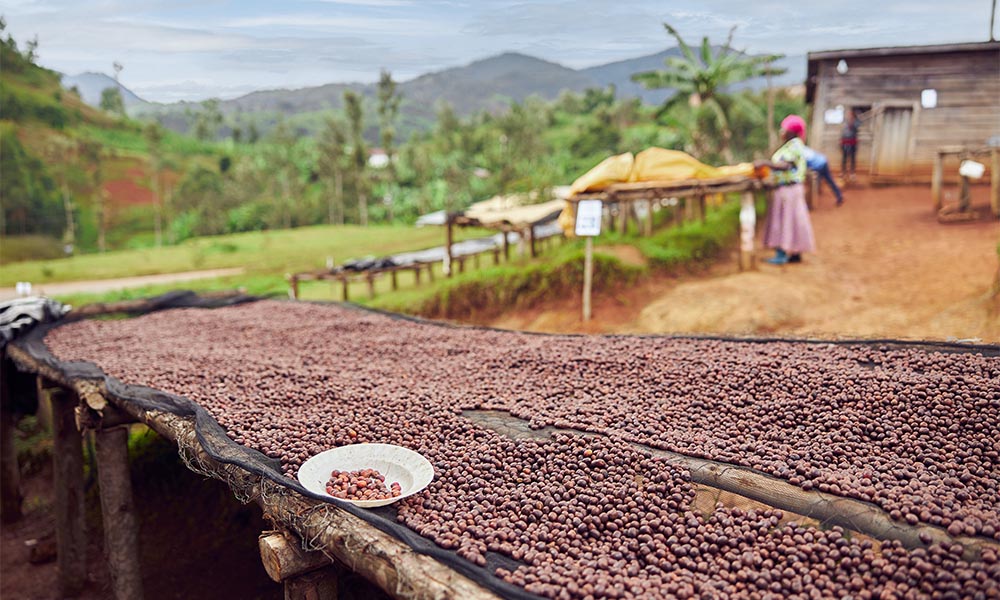
Fruit harvesting generally takes place once a year, on trees that flower and bear fruit according to seasonal rhythms. The ripe beans, called “cherries,” are hand-picked, separated, cleaned (in the case of “washed” Arabica) or left to dry with the pulp (the “natural” method), and finally selected by size, density, and quality.
These artisanal and labor-intensive practices deeply affect the final aromatic profile: altitude, climate, botanical variety, and post-harvest care all help define the uniqueness of African coffee, often characterized by fruity and floral notes, lively acidity, and a harmonious body—especially in highland arabicas such as those from Ethiopia or Kenya.
Coffee is not only an agricultural product—for many African communities it represents an essential source of livelihood. In Ethiopia, for example, millions of people depend directly or indirectly on coffee: an entire generation earns income from this crop, which contributes greatly to national exports and the rural economy.
In producing countries, plantations often represent the only stable job opportunity for many families, as well as a link to ancient traditions, biodiversity, and territory. Maintaining small plantations—often family-run—encourages a fairer economic distribution compared to industrial monocultures and helps preserve local Coffea varieties, many of which have unique genetic characteristics, often referred to as “heirloom.”
The African continent is not only the historical cradle of coffee, but still represents an irreplaceable source of quality, biodiversity, and agricultural identity. The plantations—often modest and fragmented, yet rich in history—preserve unique botanical varieties, cultivated according to centuries-old traditions and environmentally respectful methods.
For us coffee enthusiasts and professionals, exploring Africa as coffee’s origin means understanding the very soul of what we drink: a blend of wild nature, human labor, land, and culture. By valuing these origins, we contribute not only to enjoying an excellent beverage, but also to supporting irreplaceable communities and biodiversity.