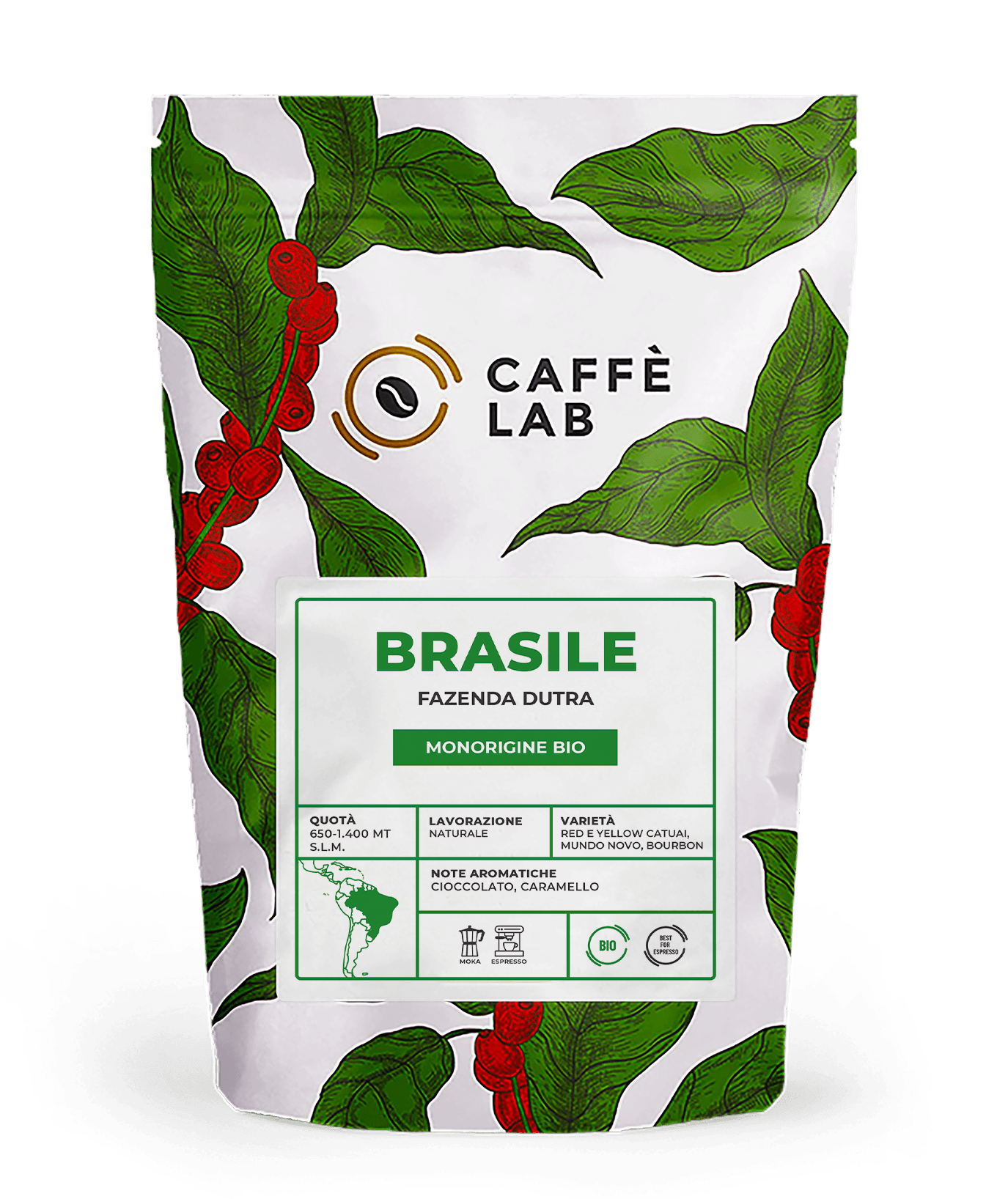


Brazil Organic
Fazenda Dutra
14.50 €
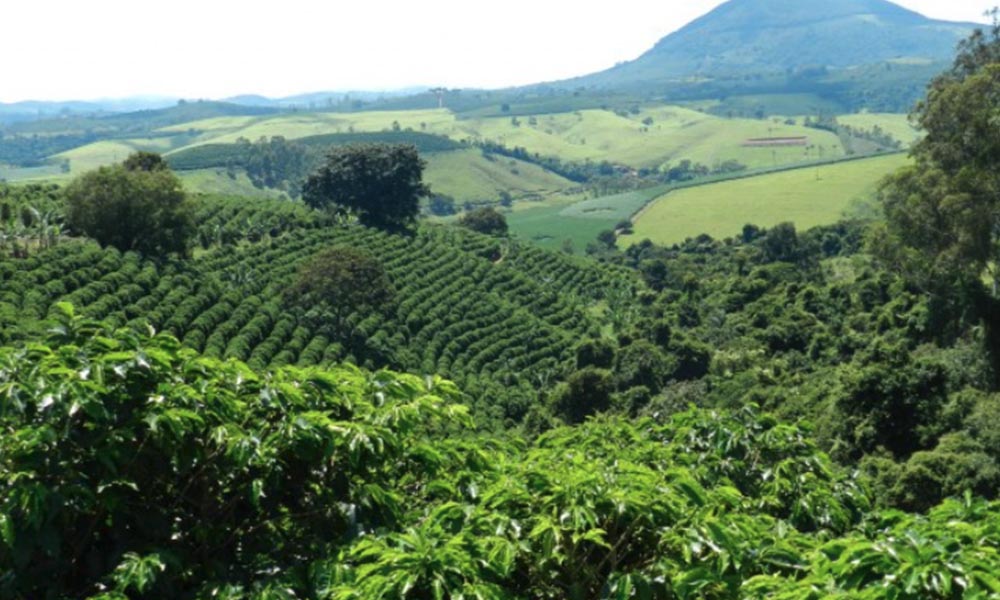
One third of all the coffee in the world is grown in Brazil. Its vast size (it is the largest country in Latin America and the fifth largest in the world) allows coffee cultivation across a wide variety of landscapes: from mountains rising above 1,600 meters in altitude to the southeastern coastlines, passing through plateaus and rainforests. For this very reason, Brazil offers a remarkable variety of coffee types.
The love story between Brazil and coffee dates back to the 18th century. The first true plantation was established as early as 1770 in the state of Rio de Janeiro. Production was initially aimed exclusively at domestic consumption, until the arrival of the “coffee boom” around the mid-1800s, driven by exponential growth in demand from the United States and Europe. In 1840, exports reached 40% of total production, making Brazil the world’s leading coffee-growing country. By the 1920s, Brazil held an almost monopolistic position in the global market, supplying nearly 80% of the world’s coffee.
As you can imagine, this is a story of success, but also one of light and shadow, closely tied to a long history of slavery and its abolition, as well as to major waves of migration to work on coffee plantations, particularly involving Italians, Spaniards, and Japanese. The history of coffee in Brazil is, in many ways, the history of the country itself.
Just like at school, after history comes geography. With fourteen main coffee-producing regions spread across seven federal states, Brazilian coffee beans represent a highly diverse mix. A quick look at the composition details of the high-quality coffee blends on CaffèLAB shows how coffee comes from Minas Gerais, São Paulo, Espírito Santo, Bahia, Paraná, Rondônia (especially for Robusta coffees), and even Rio de Janeiro.
There are countless “fazendas” – Brazilian farms – spread throughout the country, ranging from small family plantations of less than 10 hectares to large estates exceeding 2,000 hectares, as we will see below. The coffee industry, across all its stages, employs nearly four million people in Brazil.
Around two million hectares of land in the country are currently dedicated to coffee cultivation, of which the vast majority (over 70%) is Arabica. Nevertheless, Brazil is also the world’s second-largest producer of Robusta coffee after Vietnam. Much of this coffee is destined for large multinational roasting companies and is generically labeled “Santos” (named after the port in the state of São Paulo from which it is shipped). As a result, it often lacks specific origin details and traceability, becoming a massive “blend” that may include beans from many fazendas and varieties such as Mundo Novo, Icatu, Catuaí, Iapar, Catucaí, Catimor, and many others.
Brazil also has a history in the world of specialty coffee, although Brazilian 80+ coffees are sometimes less well known than their Central American or African counterparts.
Below, we have tried to present, through the most in-depth research possible, the 10 best Brazilian coffees, naturally focusing on the world of specialty coffee.
The Fazenda Mariano covers 80 hectares across the São Domingos mountain range in southern Minas Gerais. Founded in 1909 by Manoel Ignácio Barbosa, the great-grandfather of the current owner Manoel Barbosa Junqueira, the farm has since become one of the most renowned estates in the Sul de Minas region. Coffee production (with 100% Catuaí grown) is the company’s main activity, and only the most modern, environmentally sustainable and socially responsible practices are used. Particular care is taken to ensure harmony between people and nature, with environmental protection always taking priority. Wastewater from the coffee washing process is recycled, and rainwater is collected and stored through a system of reservoirs.
Fazenda Pântano has been managed by Wagner Ferrero since 1990, but it carries over a century of tradition. Founded by Italian immigrants, today it is among the most important large specialty coffee producers. The Ferrero family cultivates more than 900 hectares across the Cerrado savannas of Minas Gerais. Located at over 1,200 meters above sea level, the farm enjoys a highly favorable microclimate for specialty coffee. Fazenda Pântano grows more than 240 coffee varieties, including those renowned for their outstanding cup profiles, such as Yellow Bourbon, as well as rarer varieties under development like Acaiá, Catiguá, Ibairi, Topazio, Uva, Caturra, and Yellow Catuaí.
The name Rio Brilhante pays tribute to the river that nourishes the coffee plantations. In the 1980s, Inácio Carlos Urban acquired his first coffee farm in the Cerrado Mineiro, at altitudes reaching 1,150 meters. Over the years, he became one of the country’s leading agricultural producers and today, together with his children, the second generation, he presents his brand: Rio Brilhante Café de Origin. In the last four years, the farm has won numerous awards for productivity and quality, including three first-place awards at the Cerrado Coffee Japan quality competition, second place at the Rainforest/Imaflora competition in the natural category, and third place at the V Cerrado Mineiro Region Award, also in the natural category.
Fazenda Rainha covers 280 hectares of coffee plantations, 200 of which are dedicated to the Yellow Bourbon variety. Favorable geography and an excellent climate make it an ideal location for producing specialty single-origin coffee. The environmental policy of Fazenda Rainha focuses on balancing production with environmental conservation. The estate is certified by the BSCA – Brazilian Specialty Coffee Association – and has been a finalist in the Cup of Excellence competition multiple times.
The Carvalho Dias and Ottoni families have been growing coffee in Brazil since 1890 and are true institutions in Minas Gerais coffee culture. The fourth generation continues the family tradition across several farms, including Fazenda Rodomunho. The estate is located in Alto Paranaíba, the highest part of the Cerrado region of Minas Gerais, at approximately 900–1,050 meters above sea level. It spans 450 hectares, with 316 hectares planted with around 1.3 million coffee trees of the Mundo Novo, Catuaí, Acaiá, and Icatu varieties. This lot was processed using the natural method. Rodomunho has won numerous awards, and the family’s coffees regularly reach the Cup of Excellence finals.
Fazenda Passeio is located in southern Minas Gerais, an area renowned for specialty coffees such as Yellow Catuaí, Mundo Novo, and Acaiá. Led by Adolfo Henrique Vieira Ferreira, the estate focuses not only on high-quality coffee production but also on preserving the surrounding environment. Currently, 130 hectares are dedicated to coffee cultivation. Coffee is harvested by hand, and all local workers receive social support, including education for their children, workforce training, and environmental education.
Fazenda Cachoeira da Grama has belonged to the Carvalho Dias family since 1890, and some of its original Bourbon varietal trees are over 107 years old. The farm lies at approximately 1,100–1,500 meters above sea level in the Mogiana region of São Paulo state. This rolling, fertile area along the São Paulo–Minas border hosts some of Brazil’s oldest coffee plantations. The region takes its name from the railway line Companhia Mogiana Estrada de Ferro, founded in 1882 to transport coffee from the expanding plantations. The estate covers 417 hectares, with 165 hectares dedicated to coffee. Due to the steep terrain, almost all farm work is carried out manually.
Fazenda Progresso was founded in 1984 and has since been managed by the Borré family. Originally intended for soybean cultivation, the land proved unsuitable due to adverse climate conditions. In 2006, Fazenda Progresso began its coffee journey, quickly becoming a flagship producer in the region. Chapada Diamantina offers ideal conditions for coffee, including high altitude, well-defined seasons, favorable temperature variations, regular rainfall, and irrigation potential. The cultivated varieties are Catuaí 144 and Topazio.
The Andrade family has been producing coffee for over a century. After a period away from tradition, in the 1970s the third generation, brothers Ismael and Eduardo Andrade, repurchased the family’s coffee plantations in Carmo do Paranaíba, in the Cerrado Mineiro region of Minas Gerais. Fazenda Capim Branco in Paranaíba (Cerrado Mineiro) was the first Andrade property. Since then, the family has actively worked on creating new farms to expand cultivation, all aligned with their mission to produce top-quality coffee. Among them is Fazenda Lagoa Seca, a 111-hectare farm located at 1,105 meters above sea level in the rural district of Carmo do Paranaíba. Recognition for the Andrade brothers’ work came with the Brazil Naturals Cup of Excellence 2016. They have since ranked among the nation’s top lots multiple times, including first place with Fazenda Paraíso at the 2018 Naturals competition. This natural coffee also placed 26th at the Brazil Cup of Excellence 2020. The cultivated variety is Yellow Icatu.
The farm’s history dates back to 1830, when Francisco Ribeiro do Valle arrived from São João del Rey and acquired the former Jacuba Farm, which later became Monte Alto. His descendants – now in the seventh generation – have continued the coffee-growing tradition with Bourbon, Yellow Catuaí, Red Catuaí, Icatu, and Mundo Novo plantations. Monte Alto Coffees are renowned for their high quality and have been recognized in major Brazilian competitions, including those organized by Illy, which recently awarded them as “Best in the South of Minas.” These coffees follow strict sustainability standards and are certified UTZ, 4C, and Certifica Minas.