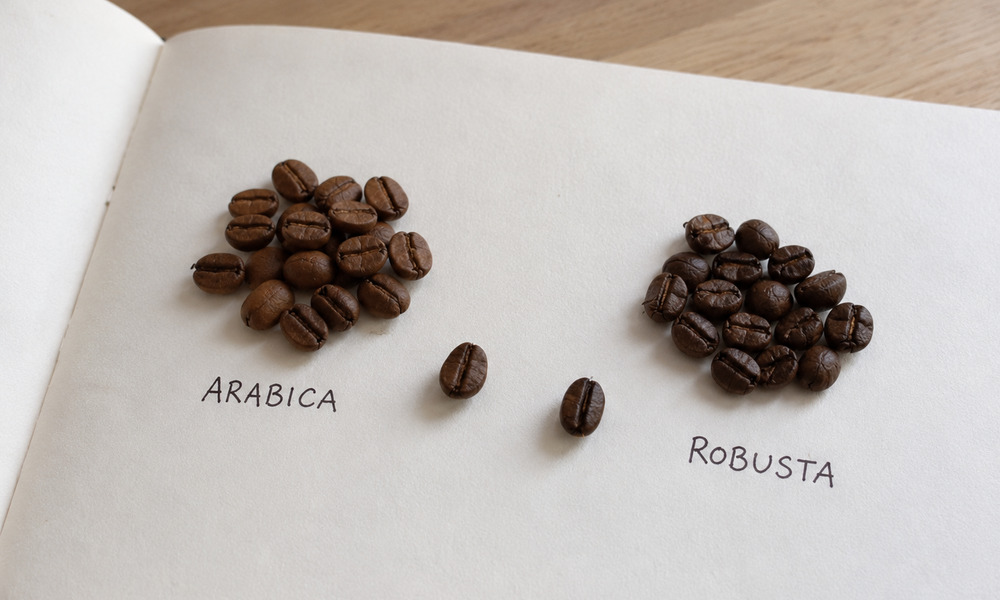
Understanding the difference between Arabica and Robusta helps consumers choose coffee more consciously, without relying on generic labels or common misconceptions. Arabica and Robusta are not simply two different “qualities”, but two distinct botanical species with their own characteristics: cultivation methods, cup yield, caffeine content, aromatic profile, and even espresso performance all differ. For CaffèLab, understanding these differences means enhancing every origin and every coffee blend in the most appropriate way.
Arabica and Robusta: the differences between the two species
Arabica belongs to the species Coffea arabica, while Robusta is generally associated with Coffea canephora. The former is often considered more refined from an aromatic standpoint, while the latter is known for its greater agricultural resilience and stronger character in the cup.
Arabica usually grows best at higher altitudes, in more delicate climatic conditions, and is more sensitive to disease and environmental stress. Robusta, as its commercial name suggests, is a hardier plant and can adapt to production environments where Arabica would be more fragile. This distinction is not merely botanical: it affects price, availability, and the way coffee is selected and roasted. Discover all of CaffèLab’s specialty coffees, featuring carefully selected and premium Robusta and Arabica varieties.
The difference between Arabica and Robusta in taste and aroma
The most noticeable difference for coffee drinkers is taste. Arabica tends to offer a more elegant cup, with brighter acidity, natural sweetness, and aromas that may recall fruit, flowers, honey, citrus, chocolate, or nuts. Naturally, the final result depends on origin, variety, processing, and roasting, but in general Arabica is chosen when aromatic complexity is desired. Among the single-origin coffees available on our website, you can find different types of Robusta and Arabica sourced from small farms.
Robusta, on the other hand, has a bolder profile: full body, more pronounced bitterness, and earthy, spicy, woody, or dark cocoa notes. In espresso, it can create a stronger and more persistent sensation, with a thicker and denser crema. This does not mean Robusta is always inferior: a carefully selected and well-roasted Robusta can offer excellent sensory quality, especially in blends designed for traditional Italian espresso.
Caffeine, body, and crema: what really changes
One of the most important aspects is caffeine content. Robusta generally contains more caffeine than Arabica, often in significantly higher amounts. This contributes to its greater bitterness, stronger intensity, and the plant’s natural resistance. Coffee lovers who enjoy freshly ground beans can discover the selected varieties of coffee beans from our brand to appreciate the aromas of a unique blend even at home.
In the cup, Robusta brings structure. This is why it is often used in espresso blends when seeking more body, long-lasting crema, and a stronger flavor impact. Arabica, by contrast, is valued for its finesse, aromatic clarity, and greater definition of sensory notes.
In summary:
- Arabica: more aromatic, sweet, complex, often more acidic and refined.
- Robusta: more intense, full-bodied, bitter, rich in caffeine and crema.
- Blend: a balance between the aromatic finesse of Arabica and the structure of Robusta.
Which type to choose for espresso, moka, and filter coffee
The choice depends on the brewing method. For filter coffee, such as V60, Chemex, or batch brew, Arabica is often preferred because it allows acidity, aromas, and flavor transparency to stand out more clearly. A medium-light roast can highlight floral, fruity, and citrus notes, especially in high-quality washed or natural coffees.
For espresso and moka pots, however, personal taste and tradition play a greater role. A 100% Arabica espresso may taste more elegant, sweet, and aromatic, but sometimes less full-bodied for those who prefer a more intense cup. A blend containing a percentage of Robusta can provide more crema, longer persistence, and a flavor profile closer to classic Italian espresso. True quality does not lie in the declared percentage, but in the selection of beans, the roasting process, and the extraction recipe.
Is Arabica always better than Robusta?
This is a very common oversimplification. Arabica has a higher reputation in the specialty coffee world because it often offers greater aromatic complexity. However, there are mediocre Arabicas and excellent Robustas. What truly matters is the supply chain: origin, harvesting, processing, storage, roasting, and preparation.
A low-quality Robusta can taste harsh, woody, and overly bitter. A fine Robusta, on the other hand, can contribute to balanced blends with cocoa notes, round body, and substantial crema. Likewise, a poorly roasted or badly extracted Arabica can become flat, unpleasantly acidic, or bitter.
To choose wisely, it helps to ask what kind of cup you are looking for. Those who enjoy aromatic, smooth, and nuanced coffee may prefer selected Arabicas. Those who love an intense, creamy, and persistent espresso may appreciate blends containing quality Robusta. At CaffèLab, the best approach is always conscious tasting: trying, comparing, and understanding how taste, body, and aroma change depending on the composition.
The difference between Arabica and Robusta involves botany, caffeine, aroma, body, and extraction performance. Arabica tends to emphasize elegance and complexity, while Robusta brings strength, crema, and intensity. Neither should be judged absolutely: great coffee comes from the balance between raw materials, roasting, and preparation.