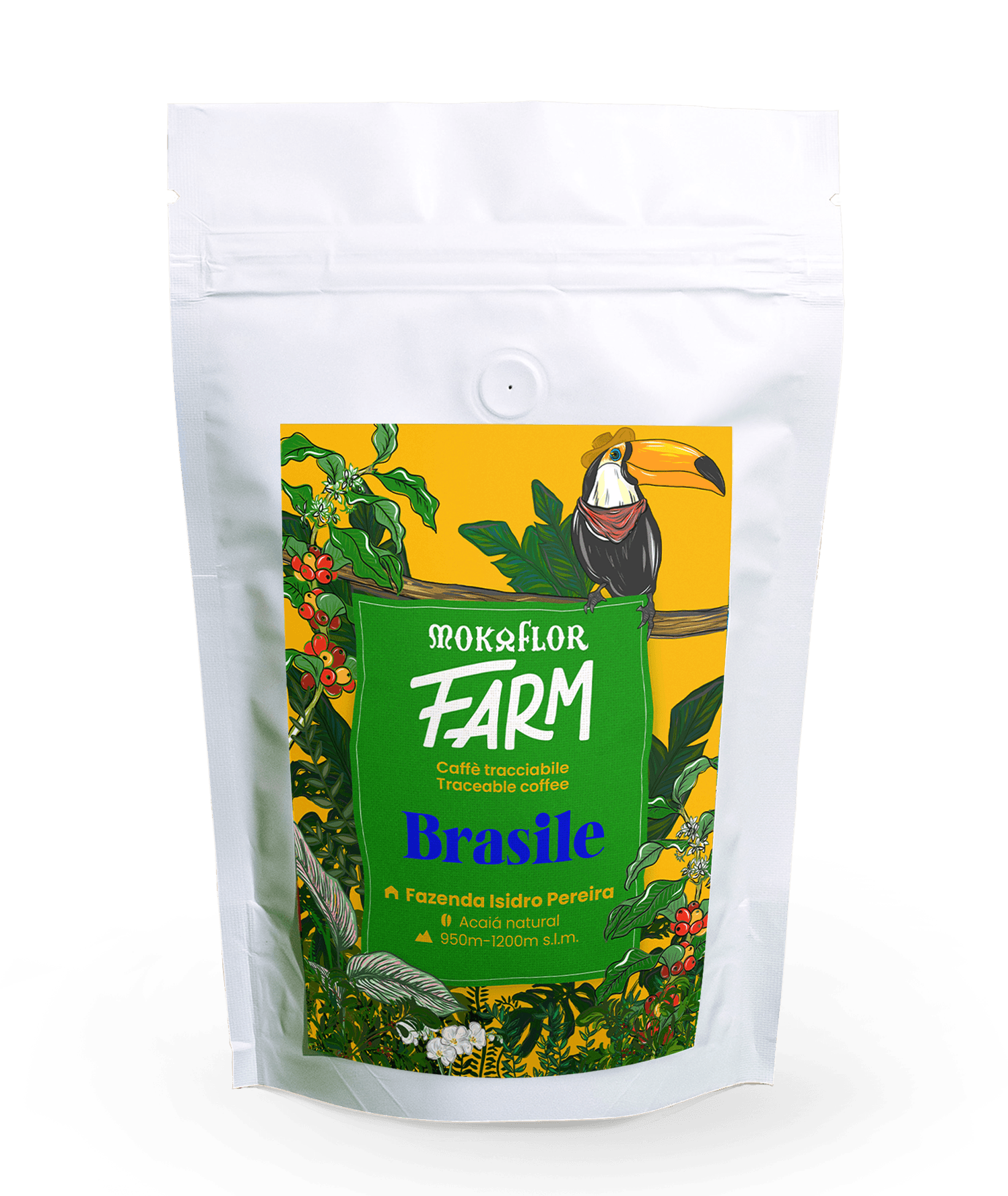


Brazil
Farm Isidro Pereira
9.60 €
The journey into the world of coffee always begins with the country of origin of the bean. Knowing the coffee-producing countries means discovering aromas, stories, and traditions that are reflected every day in the cup. Each production area, in fact, offers unique sensory nuances thanks to its microclimate, altitude, and processing techniques. Below, we explore the most renowned regions, the main players in the global market, and why the origin is so important for the final quality of coffee.
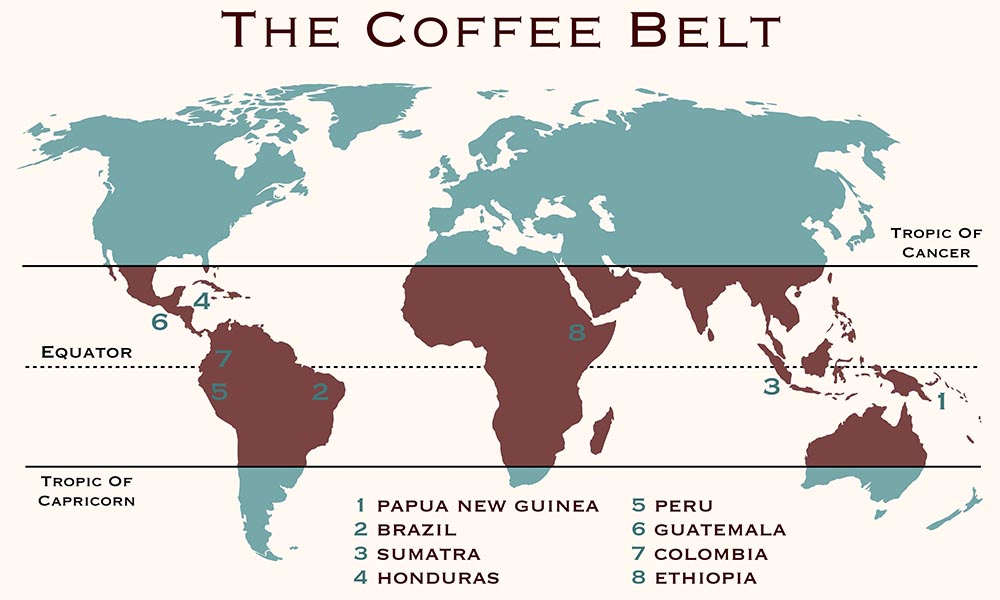
The cultivation of the coffee plant mainly takes place in the so-called “Coffee Belt”, a geographical band located between the Tropic of Cancer and the Tropic of Capricorn. Here, mild temperatures, regular rainfall, and favorable altitudes allow the growth of Arabica and Robusta varieties, the most widespread worldwide. Every producer, from the largest to the smallest, can boast the creation of truly unique coffee blends.
The main coffee-producing countries include:
Other relevant producing countries include Mexico, Peru, Uganda, and Tanzania, each with distinctive characteristics due to climate, soil, and post-harvest techniques. Many of these producing countries have developed truly unique single-origin coffees that you can taste thanks to the selection available at CaffèLAB.
Each terroir leaves its mark on coffee beans, giving them a distinct personality. Brazil, for example, thanks to its vast growing areas and stable climate, produces coffees with a generally full body and natural sweetness, often used as a base for espresso blends.
Colombia, favored by the Andes and selective hand-picking, offers clean and aromatic coffees, ideal for those seeking a balanced and lively cup. Ethiopia stands out for its great genetic diversity: its coffees are among the most sought after by connoisseurs for their floral and citrus notes and pronounced acidity.
Robusta dominates the Vietnamese Highlands: here, coffee develops an intense sensory profile, low acidity, and a persistent aftertaste, making it ideal both for traditional Vietnamese filtered coffee and for enhancing blends intended for Italian espresso. Thanks to its structure, stability, and production efficiency, Vietnamese Robusta also represents the main base for the global instant coffee industry.
The quality and aroma of coffee depend crucially on geographical and climatic factors. Altitude, for example, affects the slow ripening of the coffee cherries, promoting the development of complex aromas and higher acidity in Arabica beans. Volcanic soil, rich in minerals—such as that found in Guatemala or certain regions of Kenya—gives coffee particularly vibrant and refined nuances.
The post-harvest processing method—washed, natural, or honey—also plays a key role in defining the final sensory profile, enhancing or softening certain aromatic notes typical of the region.
In recent years, new coffee-producing countries have emerged, focusing on quality rather than quantity. This is the case with Panama, famous for its award-winning Geisha coffees, or Rwanda, which is making its mark in the world of specialty coffee with Arabicas featuring delicate and fruity notes.
In Africa, beyond Ethiopia, countries such as Burundi and Tanzania have also grown significantly. Thanks to small producers and detail-oriented cooperatives, they are able to offer coffees that are increasingly appreciated in international markets.
Knowing the coffee-producing countries helps guide your choice. Those who prefer a sweet, low-acidity cup may opt for Brazil or India, while those seeking lively acidity and complex aromas may prefer Colombia, Ethiopia, or Guatemala.
It is advisable to taste different origins, perhaps choosing single-origin coffees or blends that are transparent about bean provenance. Roast freshness and proper grinding remain key elements for fully appreciating the unique characteristics of each region.
Choosing the origin of coffee is not just a matter of taste, but also of history, environment, and culture. Each producing country brings a part of itself into the cup, enriching the sensory experience of the drinker. If you want to deepen your knowledge of the world’s best coffees, visit our guides on CaffèLAB and let yourself be inspired by the great coffee terroirs.