Colombian coffee
Colombian coffees can boast origins rich in history and sustainability. Colombia is among the most important countries for quality Arabica: mountains, microclimates, and a rural culture centered on coffee have created recognizable and highly appreciated aromatic profiles. Discover the selection of Colombian coffees offered by CaffèLab and let yourself be intoxicated by their unique aromas. UNESCO declared Colombian coffee a World Heritage site (2011), defining it as “the result of the adaptation process of settlers who arrived in the nineteenth century, a process that still persists today with a culture deeply rooted in the tradition of coffee production.”
History of the best Colombian coffee
Coffee was brought to Colombia at the end of the eighteenth century by the Jesuits, and one of them, Francisco Romero, is believed to be responsible for the spread of the first plantations in the country. He was the priest of a small town in the department of Santander, and legend has it that, as penance, he required his parishioners to plant coffee. Legend or not, from there coffee cultivation soon spread to neighboring provinces as well, and by the end of the 1800s it already represented the country’s main export product.
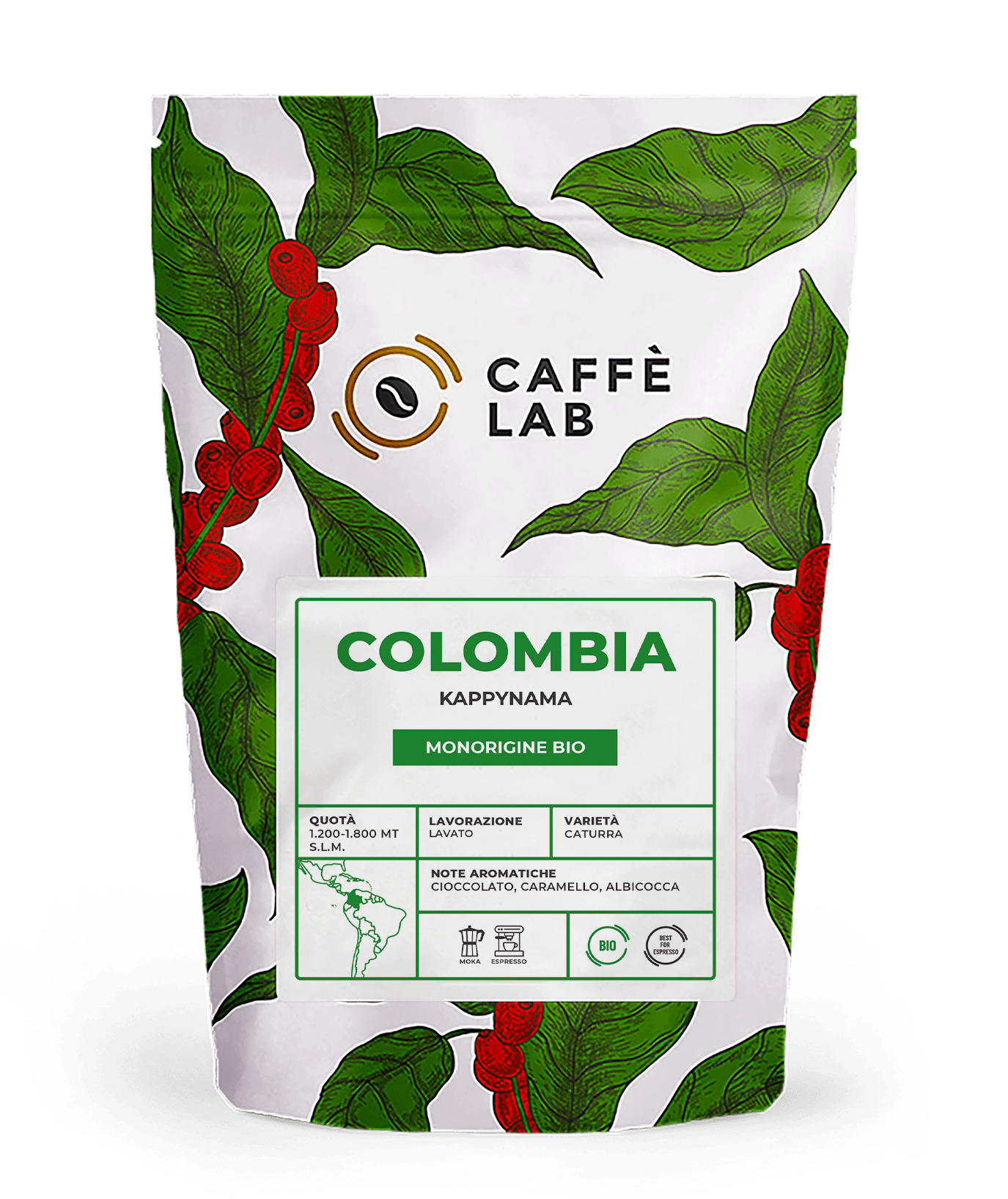


Colombia Organic
Kappynama
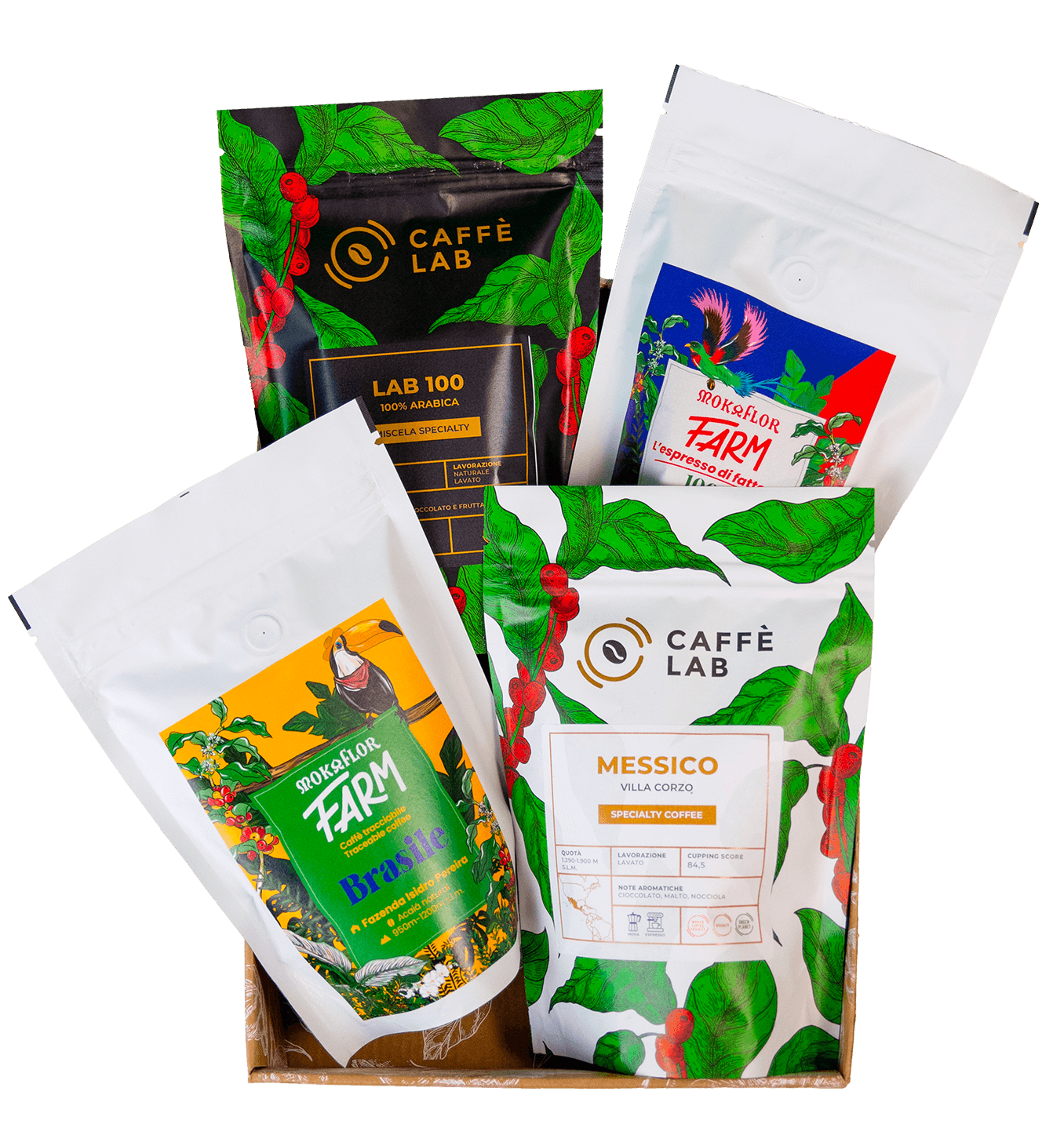
Specialty Coffee Discovery Box
Revolutionize your coffee break with Specialty coffee – 4 x 250gr
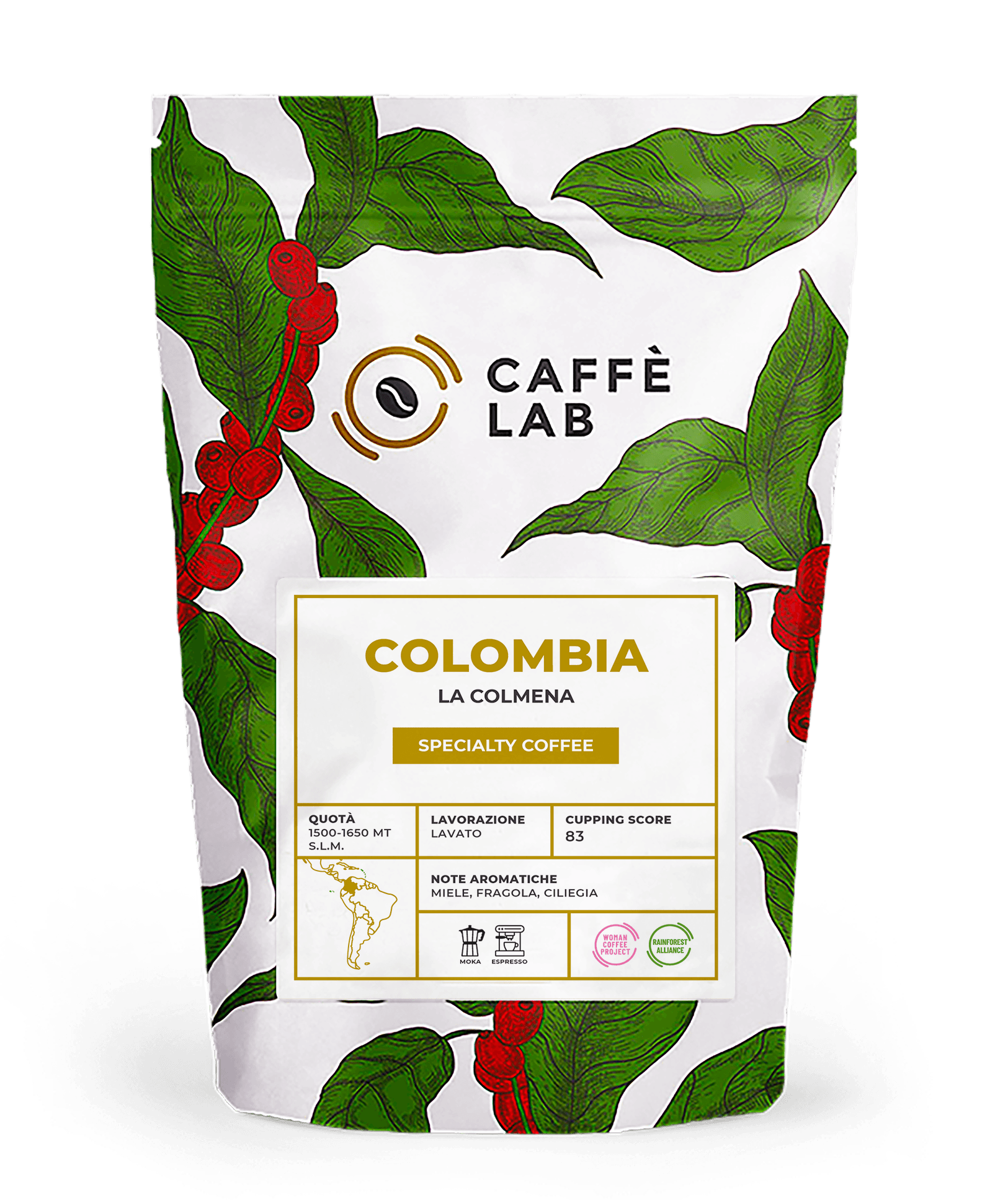


Colombia
La Colmena
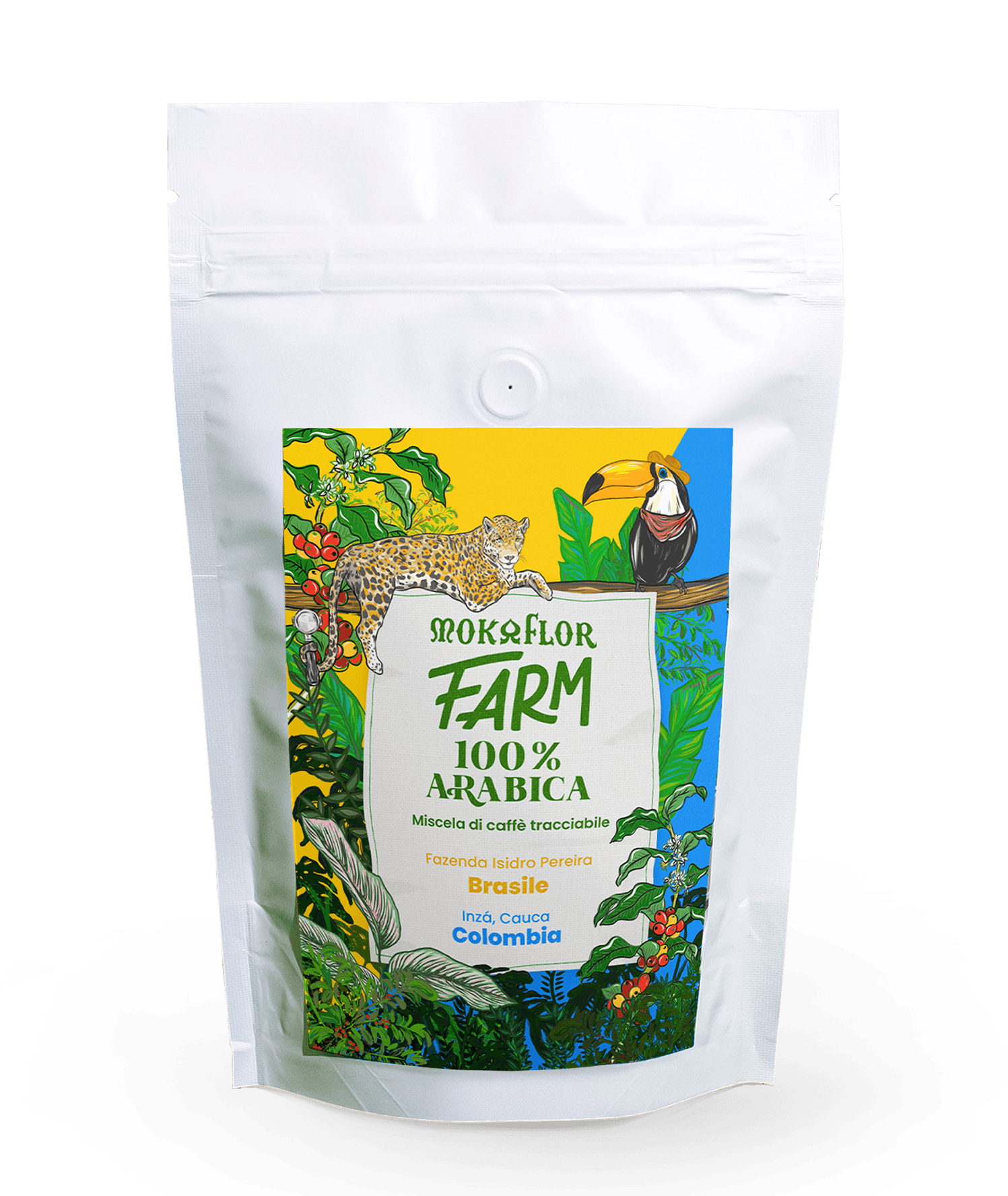
Mokaflor Farm 100% arabica
Traceable coffee
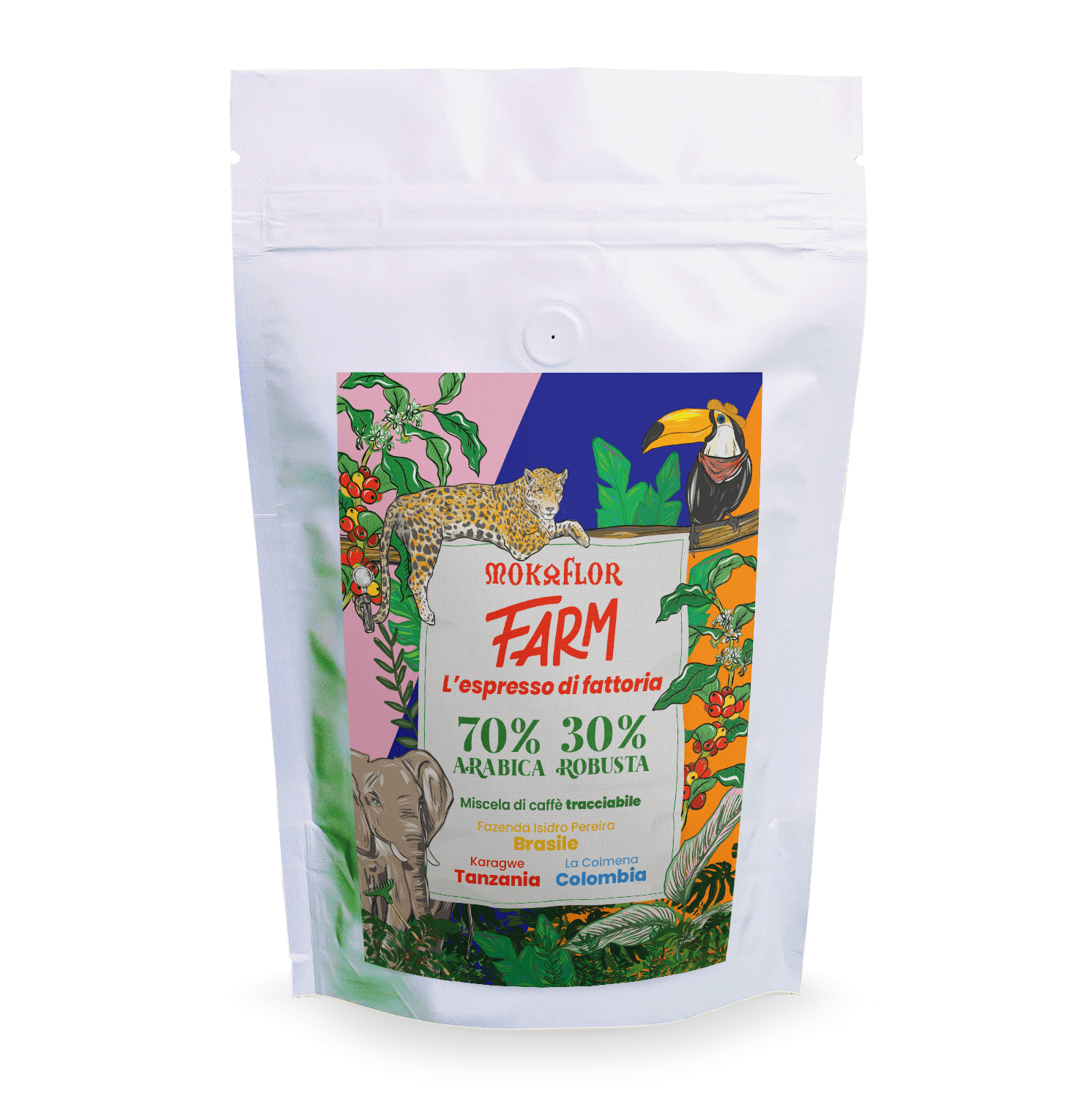
Mokaflor Farm 70/30
Traceable coffee
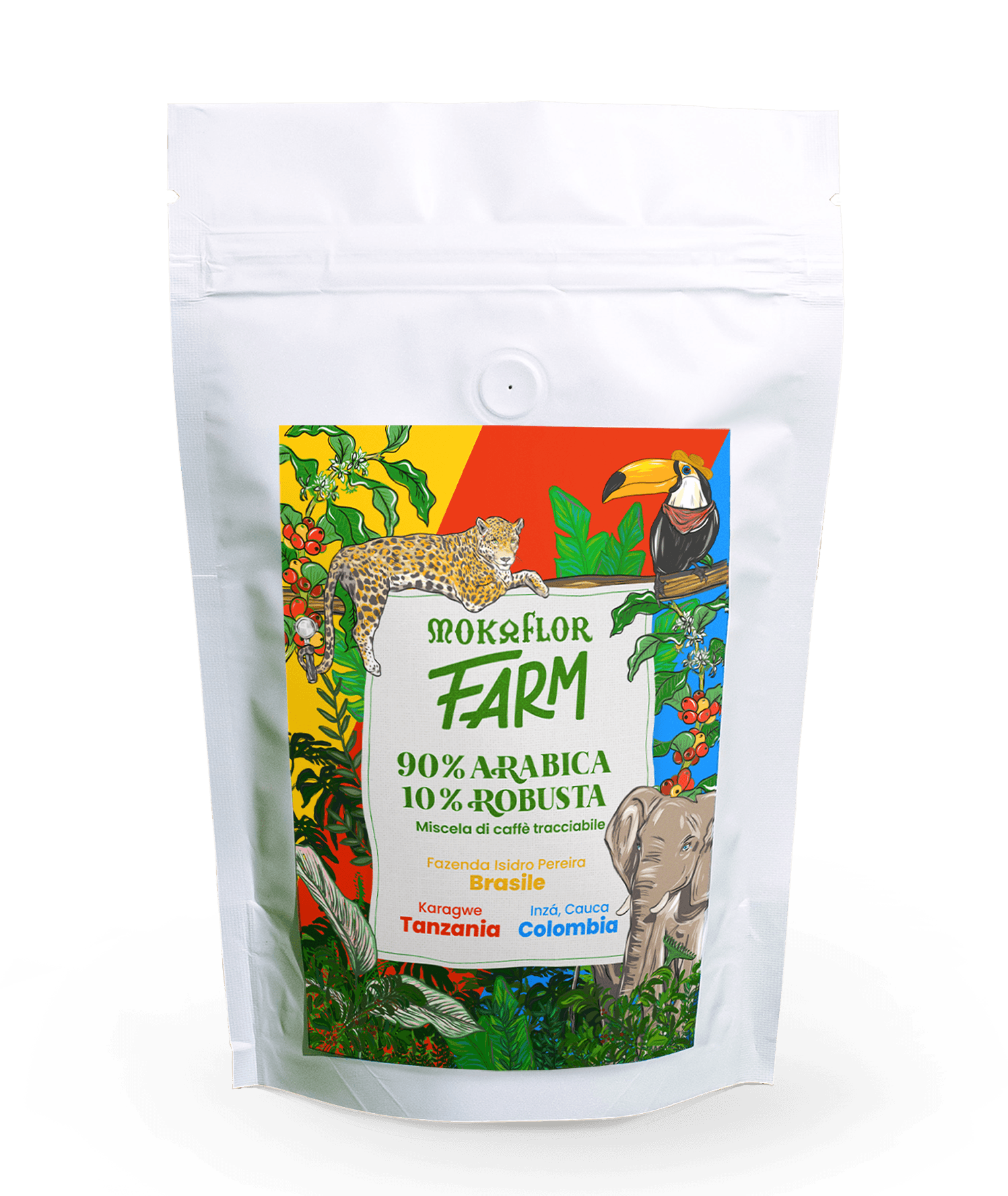
Mokaflor Farm 90/10
Traceable coffee
The regions of Colombian coffee
Colombia is the coffee giant we know today because it invested without hesitation in marketing and in defining the quality of its product. But, as we have seen, it is the characteristics of its territory that have guided the country’s entire coffee production. Today, Colombia’s mountain ranges are dotted with small and very small plantations that produce only quality single-origin Arabica coffee and provide work for more than half a million families. A production whose geographical conditions, with slopes reaching 25%, also influence the arrangement of the small orthogonal plots, and affect the architectural style, way of life, and land-use techniques of the cafeteros (coffee growers). Colombian Arabica is in fact cultivated up to 2,400 meters above sea level in a strip of land three thousand kilometers long that crosses the country from North to South.
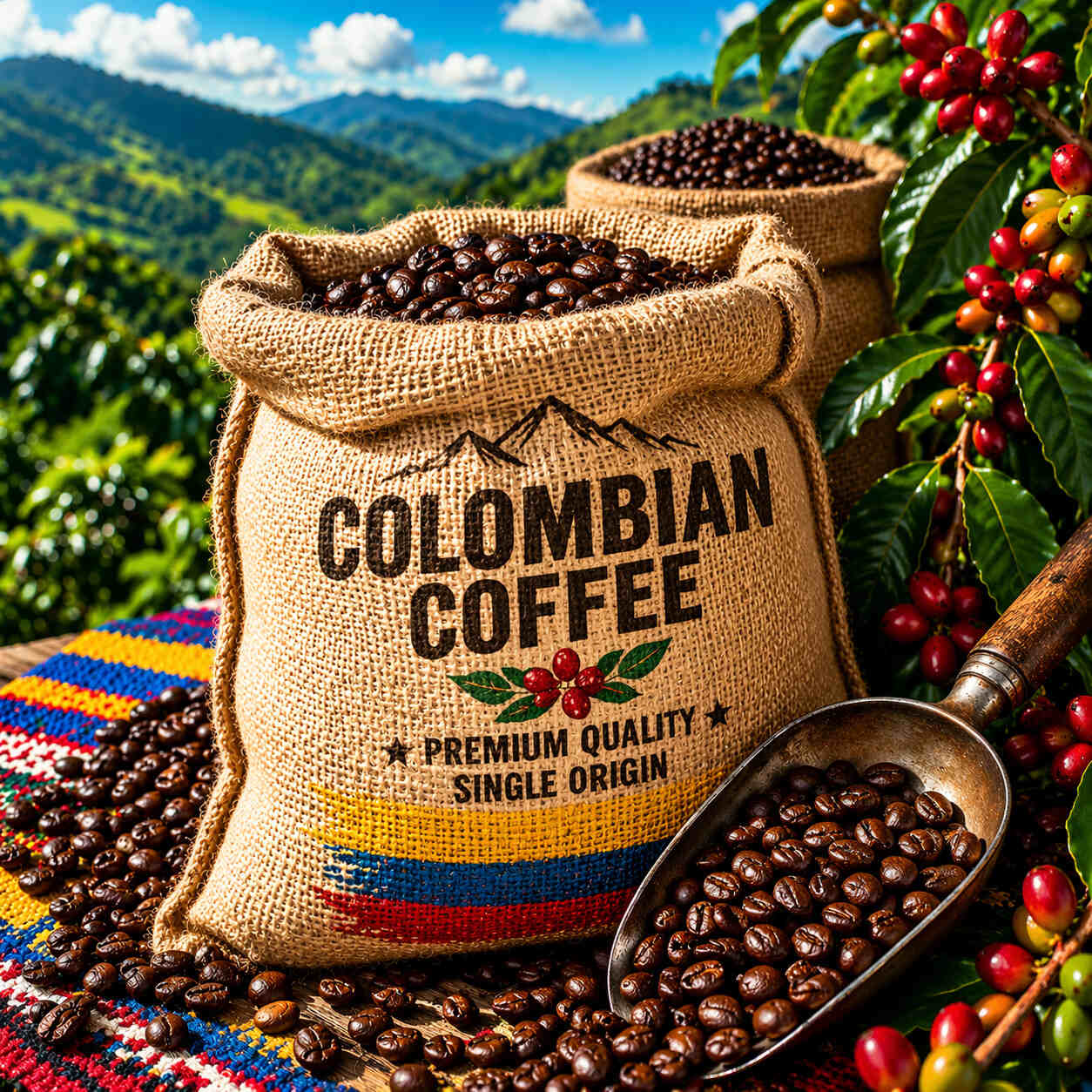
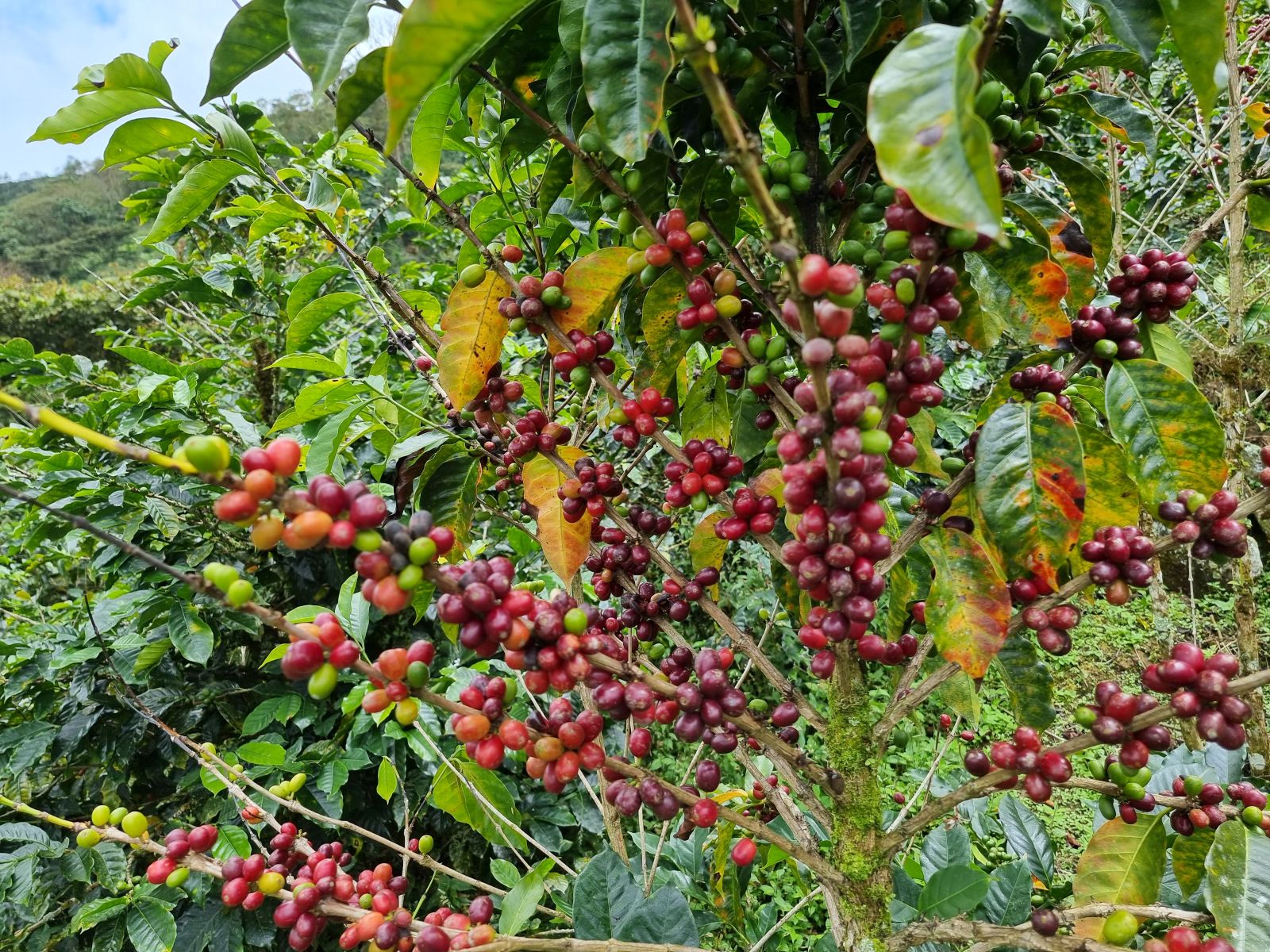
The journey through Colombian coffees with CaffèLab
Coffee is grown in five macro-areas of the country, in turn divided into twenty provinces. The central provinces of Caldas, Risaralda, Quindío, and Tolima are known as the “coffee triangle” and are the ones where most Colombian Arabica is produced. Each of these provinces produces high-quality coffee with distinctive characteristics, yet always with sweet, fruity, and floral aromatic notes, where chocolate and hazelnut can also be perceived. Caturra, Maragogype, Tabi, Typica, Bourbon, Castillo, and Colombia are the most widely cultivated varieties, although there is certainly no shortage of new developments imposed by the market. Harvesting is still done by hand and the cherries are processed mainly with the washed method: two aspects that help make Colombian specialty coffees among the most appreciated in the world.
Bianca Bernini, granddaughter of Mokaflor founder Vasco Bernini, undertook her journey with a precise goal: to visit the plantations with which Mokaflor has worked for years, focusing both on coffee processing methods and on the quality of life of the campesinos on the plantations. For this very reason, accompanying her was Alessandro Mazzocco, General Manager of the Italian branch of Olam International. Olam is among Mokaflor’s main suppliers of green coffee and is committed to supporting developing producing countries, with the aim of improving the conditions of workers on plantations and helping their communities with logistical and financial solutions. The three plantations visited by Bianca are sustainable farms that make respect for the environment and sustainable cultivation a true hallmark.

We have a gift for you!
Get your 10% discount coupon
on your first order and don’t miss out on any of our offers!